20 December 2022
TPr. CA. Cheng Hui Lin
Director
Green Acres Studio Sdn. Bhd.
Bay Avenue K-9-2
Lorong Bayan Indah 2
11900 Bayan Lepas
Pulau Pinang
TBRA FOCUS GROUP DISCUSSION SUBMISSION ON THE SP SETIA / INTRA HILLSIDE SDN. BHD. PROJECT NEXT TO LEADER GARDEN – SETIA ECO FOREST.
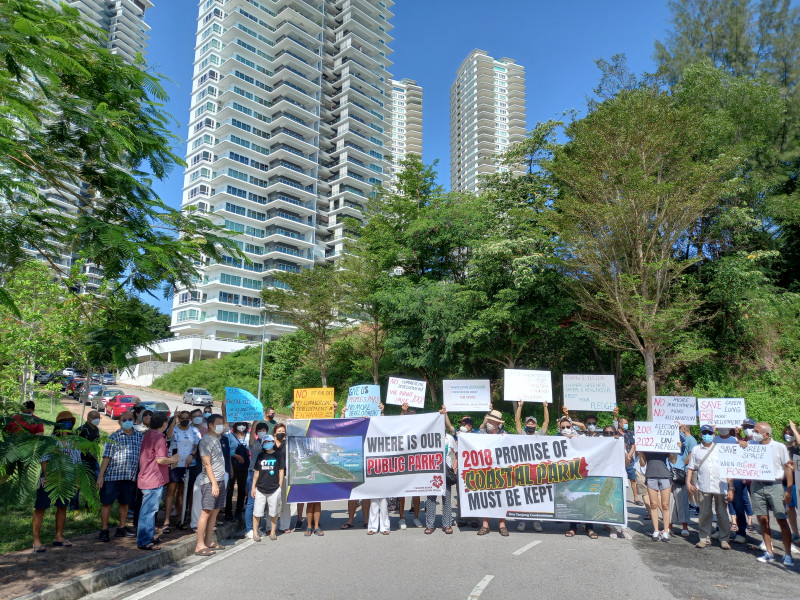
Tanjong Bunga Residents’ Association (TBRA) appreciates the opportunity to submit our further comments and concerns regarding the proposed mixed-development project on Lot 441, Lot 442, Lot 4177, Lot 4178 and Lot 10137.
Following up from the outcome of the Focus Group Discussion organised by Green Acres Studio Sdn. Bhd. – which is part of the social impact assessment (SIA) exercise, held online via Zoom on 6 December 2022 (2:30PM – 4:30PM), TBRA would like to submit our feedback on the process of the SIA and the substance of the SIA, in reference to the current state and extent of information disclosed to us at the FGD.
1. The Process of the Social Impact Assessment (SIA)
We would like to emphasize that it is important for the consultants to provide more details about the project in order for the public to provide meaningful feedback. The information that was lacking in the FGD includes (but was not limited to) the following examples:
* The development concept and justification for the project (statement of need);
* Particulars of land ownership and restrictions, if any;
* Description of the land including its physical environment, topography (including slope classification; erosion risk and landslides), landscape, geology, contours, drainage, water bodies and catchment areas and natural features thereon;
* Particulars of buildings which may be affected by the development; land-use analysis and its effect on adjoining land;
* Survey of trees (including species of trees with a girth exceeding 0.8 metres) and all other forms of vegetation;
* Should also include other biodiversity which can be impacted such as the fauna – birds, animals, reptiles etc (since the affected area is a hill forest and is well-known for presence of important species of animals including the threatened dusky leaf monkey/langurs);
* Density of project; number of units etc. (Some of these aspects above are required to be produced under section 21A of the Town and Country Planning Act 1976 as part of the development proposal report).
* The kind of earthworks and slope cuts that will be involved as under the hillslope guidelines, the types of work allowed depend on both natural and man-made slopes. We must avoid Granito type case where man-made slope resulted in massive landslides and killed innocent lives.
* Traffic impact assessment and plans.
TBRA fully understands the differences between an Environmental Impact Assessment and the Social Impact Assessment – but when it comes to public acceptance of the project, it is important to adopt a wholistic perception of the impacts that this project may entail. Therefore, the project’s impact on biodiversity and the hill slope safety matters as well in the consideration
of the public acceptance of the project.
So, there need to be arrangements for a proper townhall meeting, perhaps in the Tanjung Bunga Market space (upstairs), along with displays and explanation from consultants so that the public can give informed feedback. The display should be available for public visitation for at least a week so that information about this project is made available to more people who will be affected by it.
Also, the status of the Environmental Impact Assessment report needs to be made clear – when it is ready, and when it will be open for public participation etc, as part of the SIA process.
Only with such information available for deliberation and physical engagement can there be proper (and not superficial) feedback from neighbours, residents, and other stakeholders – as the aim of this engagement is to inform the conclusion of the SIA and gauge level of public acceptability.
Even at the online FGD, those who attended that day were only disclosed some general information of the proposed project during the session itself and were not provided any further information about the project after the FGD for us to have more time to look into it more carefully.
2. The substance – based on what little information we have thus far – below are some of our initial concerns pertaining to the proposed development project:
* This area is an environmentally sensitive area - high-risk and prone to landslides as can be seen from on-going mitigation work, Granito and Surin experience. The presence of waterfall, streams, river and water flows and their influence on the slope and terrain stability of this area is poorly understood despite a serious sinkhole incidence that took place in 2017.
* To explain this further, there were already two incidents that have happened before in the Chee Seng Garden area. Firstly, the embanked road which collapsed in 2017 in front of the row of semi-detached houses, which is adjacent to Straits Regency and Surin Condominium. Secondly, the extension of Solok Tg Bungah that was constructed for the (now stalled?) Biopolis project, which has been a long-standing eyesore scar. Note that this stretch extends to abut the proposed Setia development. In the presentation slide at the FGD, we were made to understand that there is also a cut slope reserve within the proposed Setia development, which poses imminent danger to the adjacent residents.
* The project poses an imminent danger to the residents of Leader Garden and other nearby housing. There are concerns of Highland Towers type of impacts given the proximity of the project to the hills. This causes impairment of well-being and negative effect on the mental health of local communities living nearby due to the constant worry.
* There is a great likelihood of floods to housing down-stream, and this must be articulated with a proper study, so the risks and vulnerabilities are well assessed and addressed.
* This marks the loss of last few remaining green lungs on Penang Island that are well utilised and enjoyed by the surrounding residents. This is important for well-being, mental health, quality of life – judging from very popular use of area for recreation, especially for senior citizens and retirees who live in the area.
* The disappearance of wildlife and biodiversity due to the destruction of ecosystem that supports them. Both important flora and fauna provided by this area, including the role of the hill forests in the water cycle and water retention, help support well-being of local community quality of life.
* Long-term, serious negative impacts from traffic congestion; increased level of noise, air and light pollution; higher risks of road accidents; etc – that will happen to a quiet
neighbourhood which never had to grapple with this problem.
* There will be very significant noise levels during construction and air pollution that will last for at least a decade or more and this must be made very clear to the residents as this has serious health consequences.
* There is no need for such a massive mixed-development project, especially when Penang is facing issues with the existing property overhang and glut. The common narrative that such development brings employment and economic opportunities to the public are mostly rhetorical statements and are not backed by any study.
In summary, TBRA would like to put on record that it strongly does not support such kind of development in this environmentally sensitive area which is known to be prone to landslides, floods and slope instability.
We want our green lung to be protected and recreation space to be maintained.
TBRA does not see any positive impacts that are truly beneficial to the public to warrant such a project – which on the contrary, creates long-term problems for the affected residents.
Thank you.
Tis PDF file: https://acrobat.adobe.com/id/urn:aaid:sc:AP:91b2378b-3308-46cc-9c0b-4465be656803
More details on FB: https://www.facebook.com/tbra2015/posts/pfbid0NQfJ1int7m6gxcwHVpeVjfHmM4Wq9WU7WsYmacGuCSb6Ne7RFcQukQBTrMVmYdVxl
This release on FB: https://www.facebook.com/tbra2015/posts/pfbid02NHEXwxD9PuGG9yyoMgfE5NaDgE31FURBhw3dxbQUGc1uF2dLJP9McJB2x71v8Rwnl


.png)